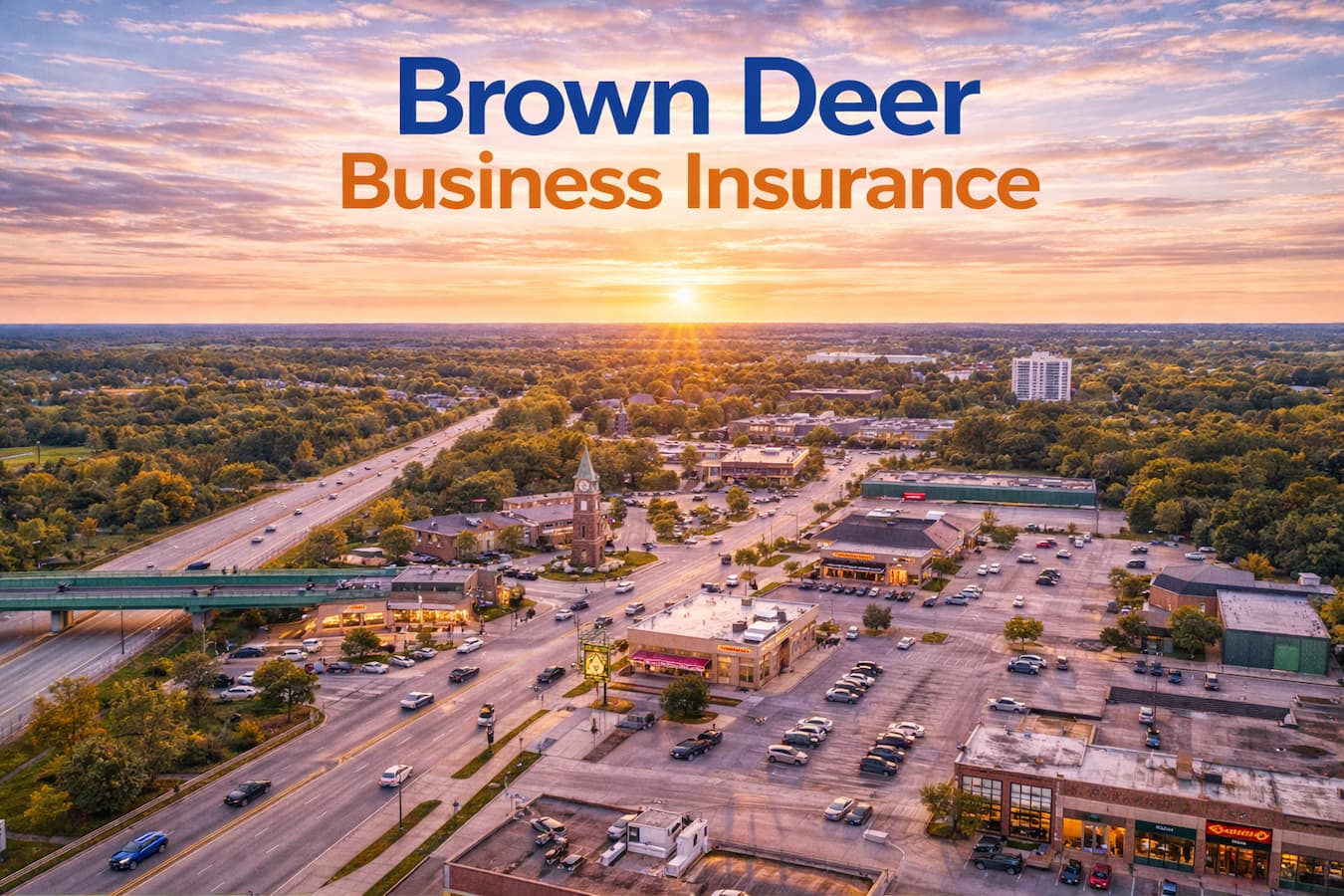
Small business insurance is one of the most important conversations a Brown Deer business owner can have, especially during the first few years of growth. It is easy to think of insurance as a formality — something needed for a landlord, a contract, a state requirement or a certificate request. But for many small businesses, insurance is much more than that. It is what stands between one bad accident and months or years of financial setback.
Think about how many Brown Deer small businesses operate with meaningful exposure even when they still look lean from the outside. Retail stores, offices, therapists, repair shops, wellness providers, local service firms, trades, consultants, small warehouses, neighborhood restaurants, studios and contractor operations all have a common theme: they may look modest from the outside, but what is tied up inside them is significant. Improvements to a leased space, shelving, equipment, inventory, signs, computers, job schedules, client records, point-of-sale systems, service vehicles and the owner’s own time and energy are all part of what is at stake.
For many of these businesses, a Brown Deer Business Owners Policy (BOP) can be a strong starting point. A BOP often combines liability and property coverage into one practical package and may also include business income protection. It can be a great fit for many shops, offices, service operations and neighborhood businesses. But not every small business fits neatly into a BOP, and even when it does, the details still matter. Property limits must make sense. Income coverage should reflect real downtime exposure. Endorsements and exclusions should be reviewed. The policy should fit the business you have now, not just the one you had two years ago.
That is especially true in Brown Deer, where many small businesses operate in commercial strips, office settings, mixed retail environments, contractor or service locations and warehouse-style occupancies where property values, vehicle use, winter exposure, water backup concerns, signage requirements, storage and business interruption all deserve real attention. If a small business owner has upgraded space, increased stock, added equipment, added vans or expanded staffing, those changes should be reflected in the policy. If they are not, the business may discover too late that the insurance program was never really keeping pace.
We also like to talk through what small business owners often overlook: hired and non-owned auto exposure, cyber and payment-system risk, employment-related issues, equipment breakdown, outdoor property, seasonal swings, jobsite exposures and how income would actually be affected if a location had to close. These are not rare hypotheticals. They are the kinds of everyday disruptions that can genuinely hurt a local business if coverage is too thin or too generic.