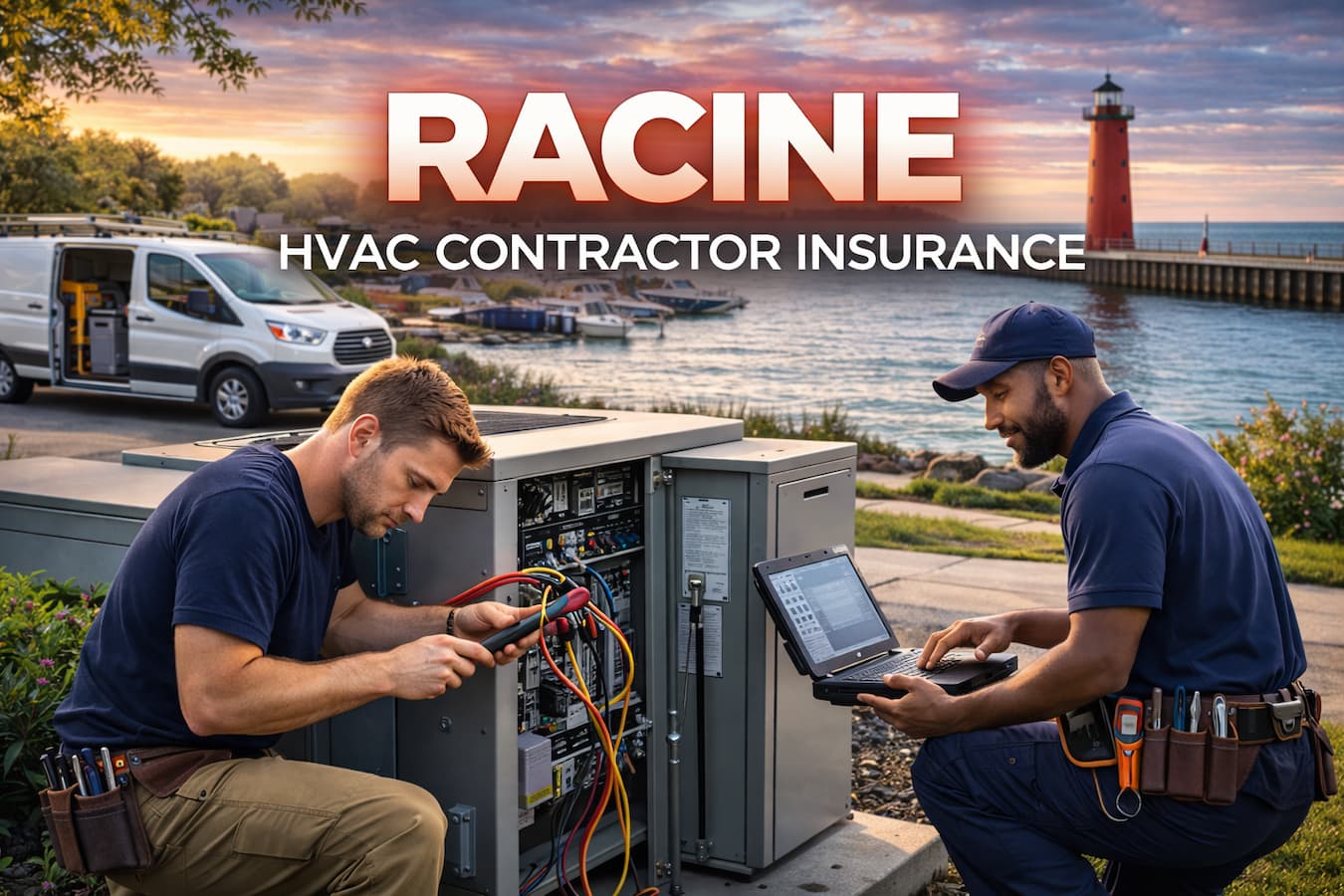
Racine HVAC is weather-driven work—lakefront wind, winter spikes, and fast routes
In Racine, the weather isn’t a footnote—it drives operations. Lakefront wind, rapid temperature swings, and winter storms
create real demand spikes: no-heat calls, emergency repairs, and rushed schedules where you’re making stop-after-stop across town.
That “high-frequency day” changes risk exposure: more miles, more parking maneuvers, more slip hazards, and more chances for a small
incident to turn into a big loss.
That’s why we treat commercial auto as a core HVAC coverage—not a checkbox. We align garaging, mileage,
driver selection discipline, vehicle types, and physical damage to how you actually operate. If your techs use personal vehicles
for parts runs or quick errands, we’ll also talk about hired and non-owned auto (HNOA) so the business isn’t exposed.
Commercial work in Racine County means COIs have to be right
Racine HVAC contractors often service a mix of tenant spaces, warehouses, light manufacturing, restaurants, and multi-unit properties—especially
when you’re operating in and around Mount Pleasant, Sturtevant, and the I-94 corridor. Those jobs come with paperwork:
certificates of insurance, contract requirements, additional insured wording, waiver language, and “primary/non-contributory” requests.
ITG builds your HVAC program to be contract-ready from day one—so COIs get issued cleanly and pass the first time.
The goal is speed and correctness: fast certificates that are backed by real policy language, not just a pretty PDF.
Older building stock + occupied spaces raise the stakes
Racine has a lot of occupied buildings where HVAC work is high-touch: finished spaces, shared mechanical rooms, older duct runs,
and retrofits where access isn’t easy. That’s where insurance gets tested. Water damage allegations from condensate,
accidental property damage during access work, or a post-install complaint can quickly become a dispute—especially if multiple parties are involved.
We structure general liability to match real HVAC service + install exposure, with attention to completed operations
because HVAC claims aren’t always “same day” claims. They can show up after the fact—when a tenant complains, a property manager calls,
or an issue is discovered weeks later.
Tools theft is operational downtime—tools coverage is revenue protection
HVAC vans are rolling workshops. That means theft isn’t just “replace the tools.” It’s missed calls, delayed installs, and customer frustration
at exactly the moment your schedule is full. Tools & equipment coverage (inland marine) is one of the most practical
layers for HVAC because it keeps one bad day from becoming a week-long revenue disruption.
Winter changes injury risk (workers comp) and claim severity (umbrella)
Winter brings more emergency calls and more hazards: icy lots, ladders, roof access, and tight schedules. That’s why workers comp is about more than compliance—
it’s stability. For many HVAC businesses, umbrella becomes relevant earlier than expected because fleet driving + completed ops exposure
can produce losses that exceed base limits.
Connect the stack with:
General Liability,
Commercial Auto,
and
Umbrella.